 Feather Tools Blog
Creating Printable Weight Tracker: From Digital to Physical Motivation
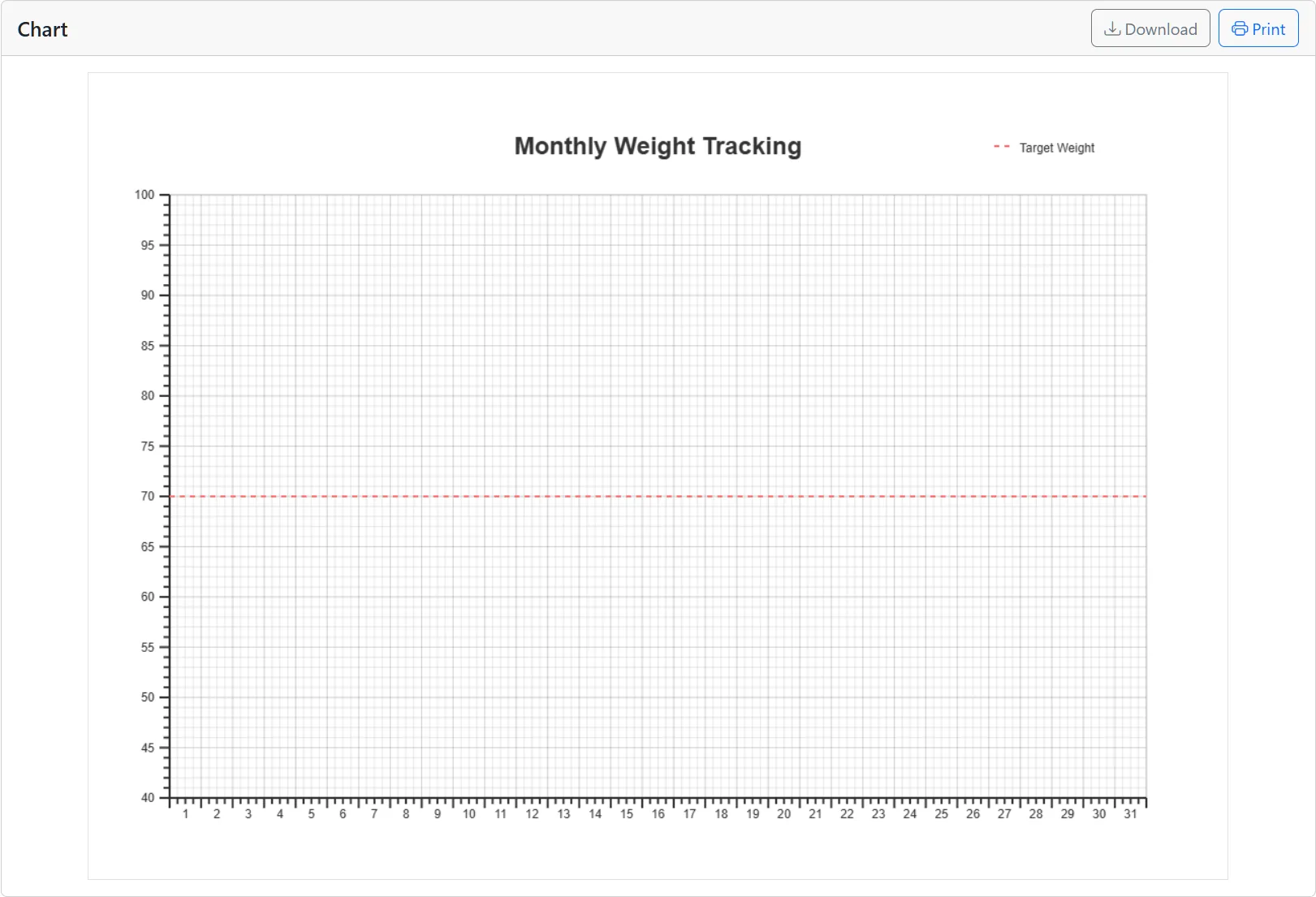
When I started building Weight Tracker, I had a specific goal in mind: create a tool that bridges the digital and physical worlds for weight tracking. I wanted something that doesn’t require constant reliance on electronic devices, but instead generates tangible, printable charts that users can put on their walls as daily reminders and sources of motivation.
The Problem I Wanted to Solve
I noticed that most weight tracking solutions force you to stay glued to your phone or computer:
-
Complex mobile apps require you to open them every time you want to record your weight
-
Online platforms store your data in the cloud, often behind account walls
-
Paper-based methods work but are tedious to set up and lack professional-looking charts
What was missing was a simple tool that creates clean, printable weight tracking charts without requiring users to be constantly connected. I wanted to build something that respects user privacy while creating a physical artifact that serves as both a record and a daily motivational tool.
Design Philosophy: Digital Tool, Physical Result
My guiding principle throughout development was creating a digital tool that produces a meaningful physical result. I wanted the digital experience to be quick and straightforward, while the physical chart would be the lasting, impactful part.
Three Tracking Periods for Different Needs
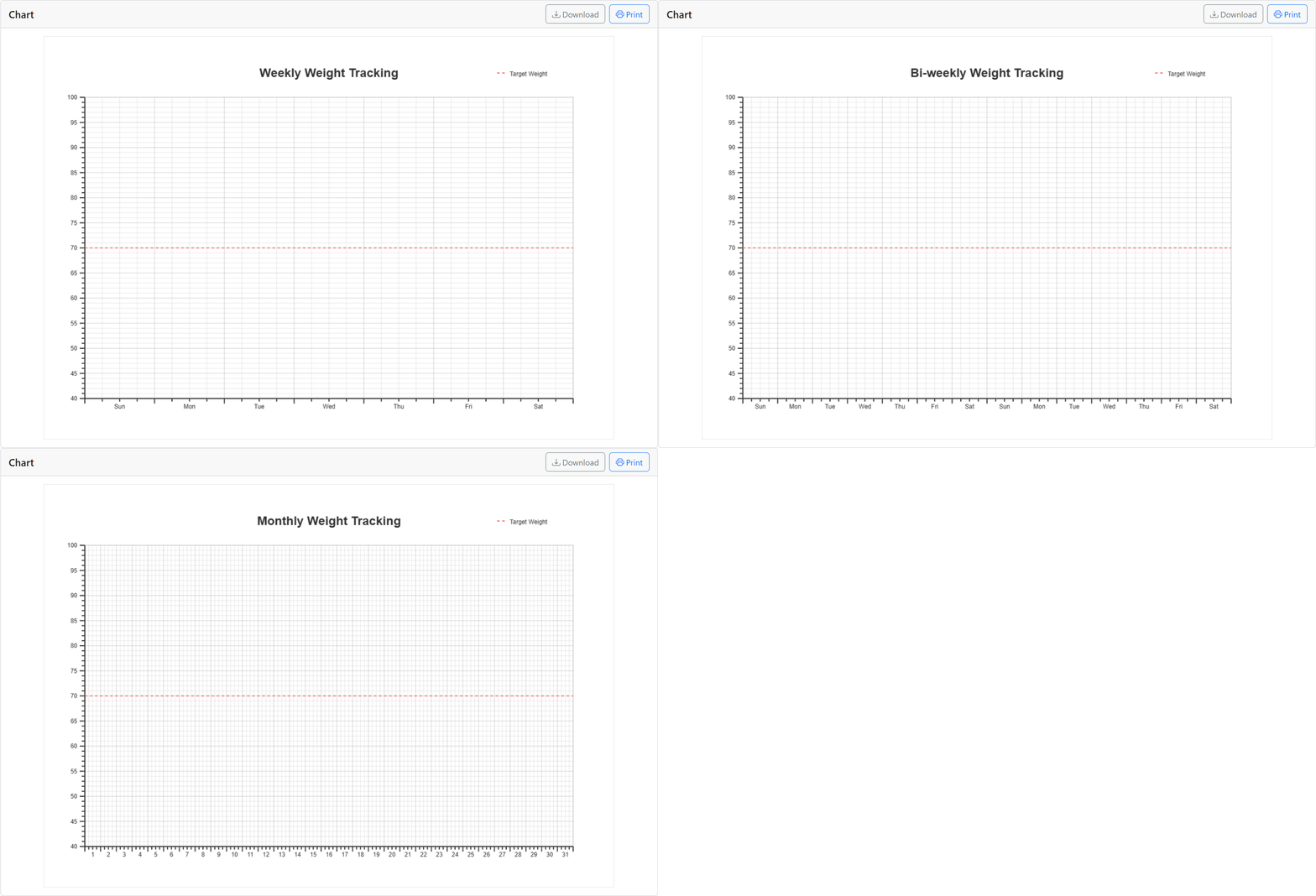
I decided to offer three tracking periods because I realized different users have different physical recording needs:
-
Weekly charts are perfect for short-term goals and fit easily on smaller wall spaces
-
Bi-weekly charts provide a balanced view and work well for medium-term progress
-
Monthly charts offer comprehensive tracking and become valuable parts of a long-term health journal
I also added the option to choose Sunday or Monday as the start of the week. This small detail ensures the printed chart aligns with the user’s existing calendar system, making it feel more integrated into their daily life.
Weight Units That Work Globally
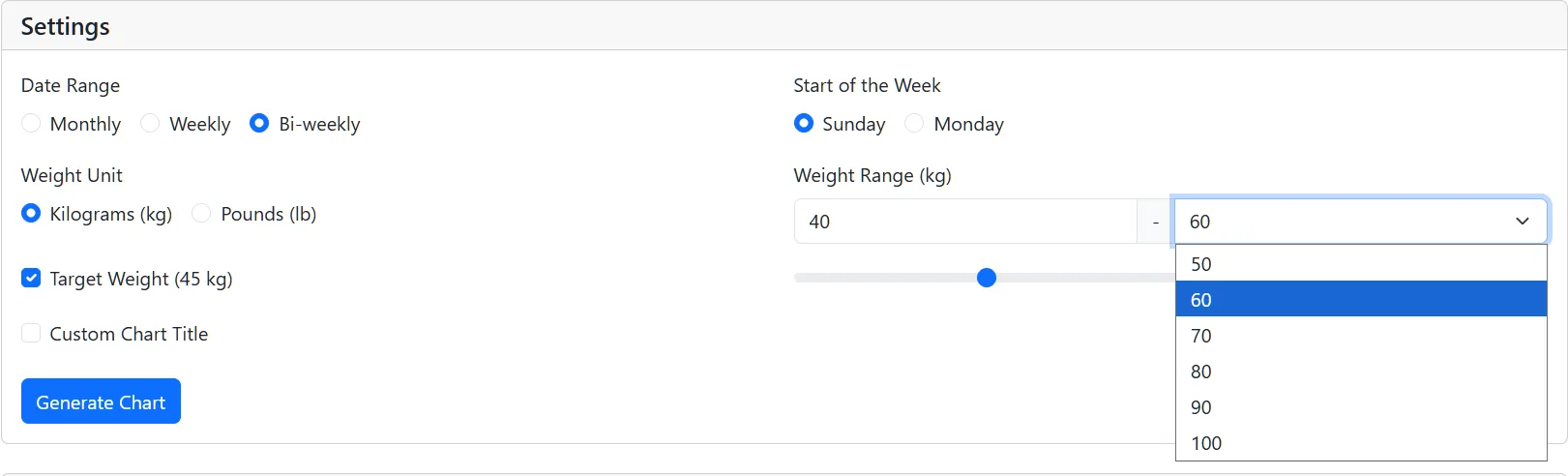
Supporting both kilograms and pounds was essential for creating a tool that works for people worldwide. When users switch between units and regenerate the chart, everything updates accordingly - the scale, the labels, even the target weight display. This ensures the printed chart uses the unit the user is most comfortable with.
Customizable Weight Ranges
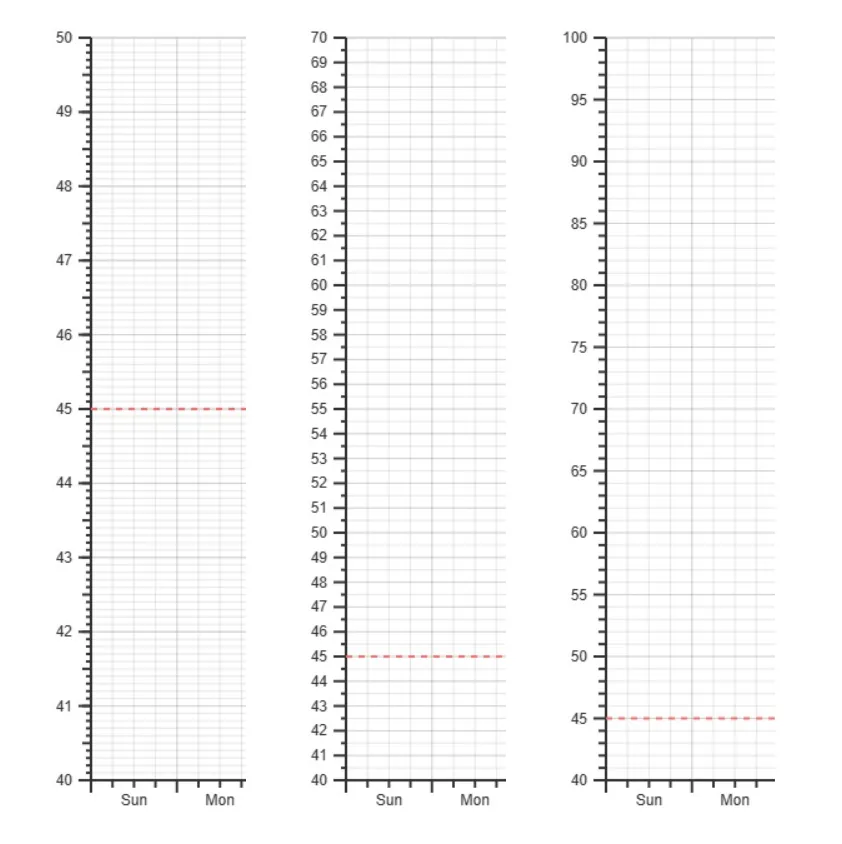
I know that people come in all shapes and sizes, so a one-size-fits-all weight range wouldn’t work for printed charts. I built in the ability to customize the range, but I also wanted to make it smart.
When users set a narrow range, the scale becomes more precise on the printed chart. When they set a wider range, it adjusts to keep the chart clean and readable. This automatic adaptation ensures the printed result always looks professional, regardless of the user’s weight range.
The Target Weight Feature: A Visual Motivator on Your Wall
The target weight feature was designed specifically with the printed chart in mind. I didn’t want it to be just another digital setting - I wanted it to be a physical reminder on the wall.
That’s why I made it a prominent red dashed line that stands out clearly on the printed chart. I also added a legend in the corner so anyone looking at the chart understands what it represents. The slider for adjusting the target weight makes it easy to update goals and print new charts as circumstances change.
There’s something powerful about seeing that red line every day on your wall. It serves as a constant reminder of your goal and provides visual feedback as you progress toward it.
Privacy: Your Data Stays With You
From the beginning, I made a conscious decision that all processing would happen in the browser. No data leaves the user’s device. No accounts to create. No cloud storage.
This approach aligns perfectly with the goal of creating a physical record. Your weight data stays private, and the only record is the chart you print out and keep for yourself. This gives users complete control over their information while still providing the benefits of a digital tool.
Printing: The Core Experience
Printing wasn’t an afterthought - it was the core experience I designed for. Even though we live in a digital age, I believe there’s unique value in having physical records that you can see every day.
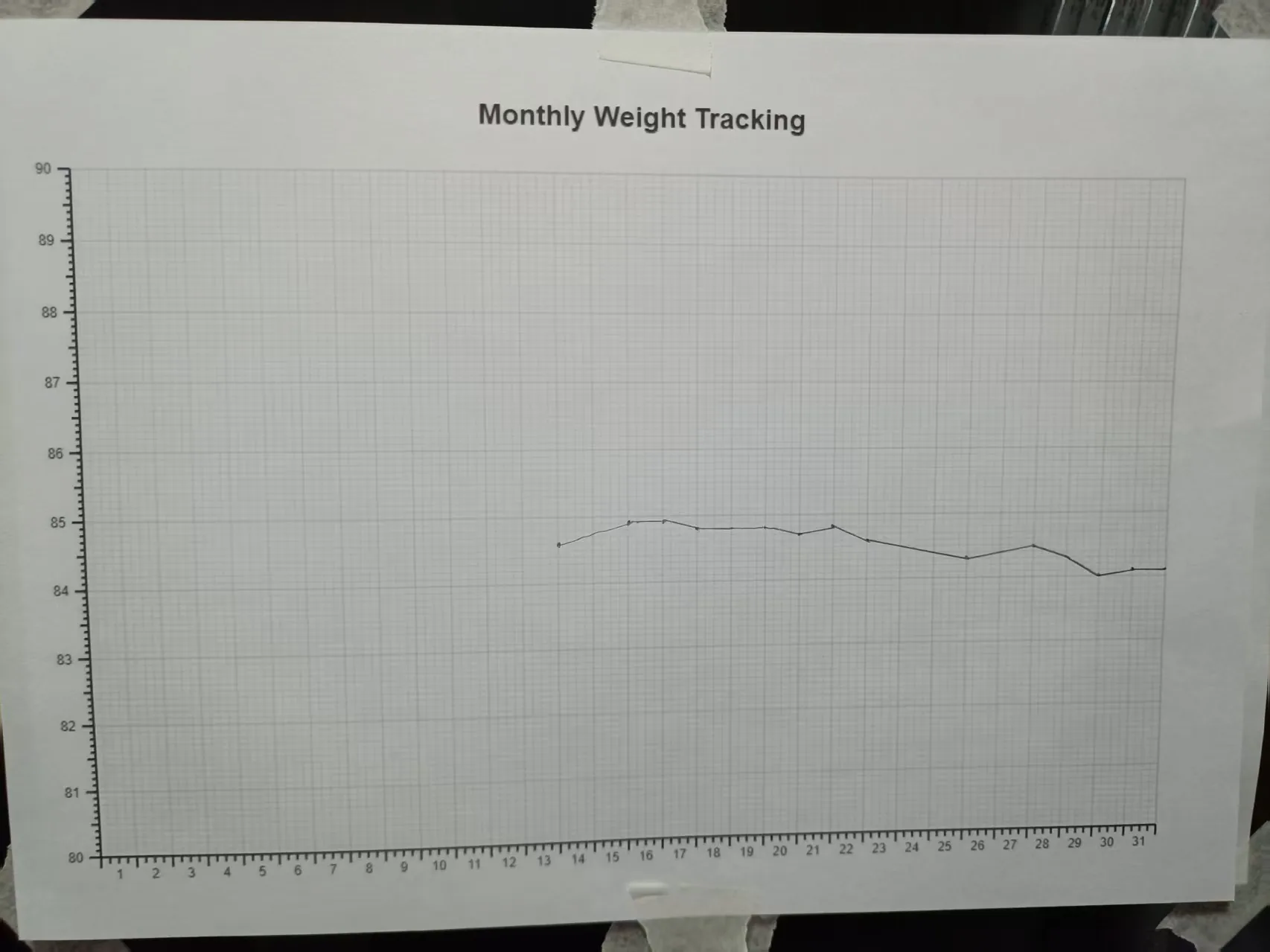
I optimized the entire chart for A4 landscape printing. The print quality is crisp, the layout is clean, and everything fits perfectly on the page. One click is all it takes to generate a chart that’s ready to be printed, framed, and hung on a wall.
The chart is designed to be visually appealing enough that users will be proud to display it, while still being functional enough for regular use. The grid lines are spaced perfectly for handwriting entries, and the scale is clear enough to read at a glance.
Details That Enhance the Physical Experience
Throughout development, I paid attention to small details that improve the physical chart experience:
The grid system divides each day into four parts, allowing for multiple daily measurements to be handwritten on the printed chart. The scale automatically adjusts precision based on the weight range to ensure optimal readability. The custom title option lets users personalize their charts before printing, adding a personal touch to their wall display.
These details make the printed chart more useful and enjoyable to interact with on a daily basis.
Who This Physical Approach Benefits Most
I had specific users in mind while creating Weight Tracker with its physical focus:
Fitness enthusiasts who want to see their progress on the wall without opening apps or logging into accounts.
People on weight loss journeys who need daily visual reminders of their goals and progress.
Health-conscious individuals who prefer tangible records over digital ones, or who want both.
Anyone with limited screen time who doesn’t want another app taking up space on their devices.
Privacy-focused users who want to track their weight without sharing data with any service.
My Vision: From Digital to Daily Motivation
When I create tools, I always aim to solve a specific problem in a way that improves people’s lives. With Weight Tracker, my vision was to create a bridge between the digital tools we have and the physical reminders we need.
Weight Tracker isn’t trying to replace comprehensive health platforms or digital fitness apps. It’s simply a tool that creates a physical artifact - a chart you can put on your wall that reminds you of your goals and tracks your progress.
If it helps someone stay motivated by seeing their progress every day, if it makes weight tracking a simpler, more pleasant experience, or if it gives someone a tangible record of their health journey, then I consider it a success.
The Power of Physical Reminders
There’s something uniquely powerful about physical reminders. A chart on your wall doesn’t require you to unlock a phone, open an app, or remember a password. It’s just there, every day, reminding you of your goals and showing you how far you’ve come.
That’s the magic of Weight Tracker. It uses digital technology to create something physical that becomes part of your daily environment. It’s a tool that respects your privacy while giving you a visible, tangible record of your progress.
You can try Weight Tracker for yourself at feather-tools.com/weight-tracker.
If you try Weight Tracker, I hope it helps you create meaningful physical records that keep you motivated on your health journey. And if you have suggestions for how to make it even better, I’m always listening.